EXECUTIVE SUMMARY
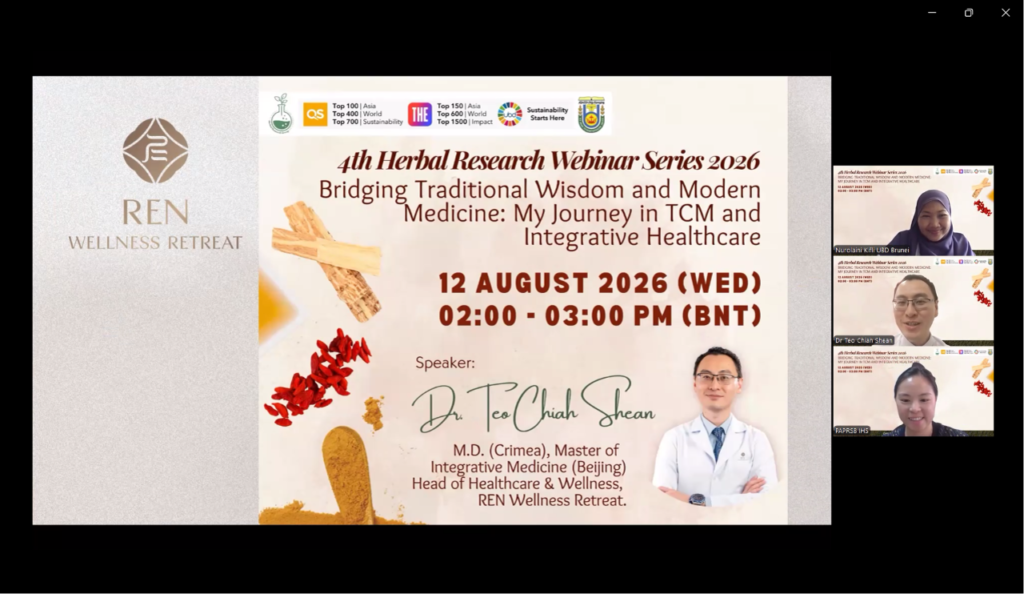
4th Herbal Research Webinar Series 2026
Bridging Traditional Wisdom and Modern Medicine
Date: 12 August 2026
Guest Speaker: Dr. Teo Chiah Shean, Head of Healthcare and Wellness, REN Wellness Retreat, Malaysia
Attendance: 65 participants
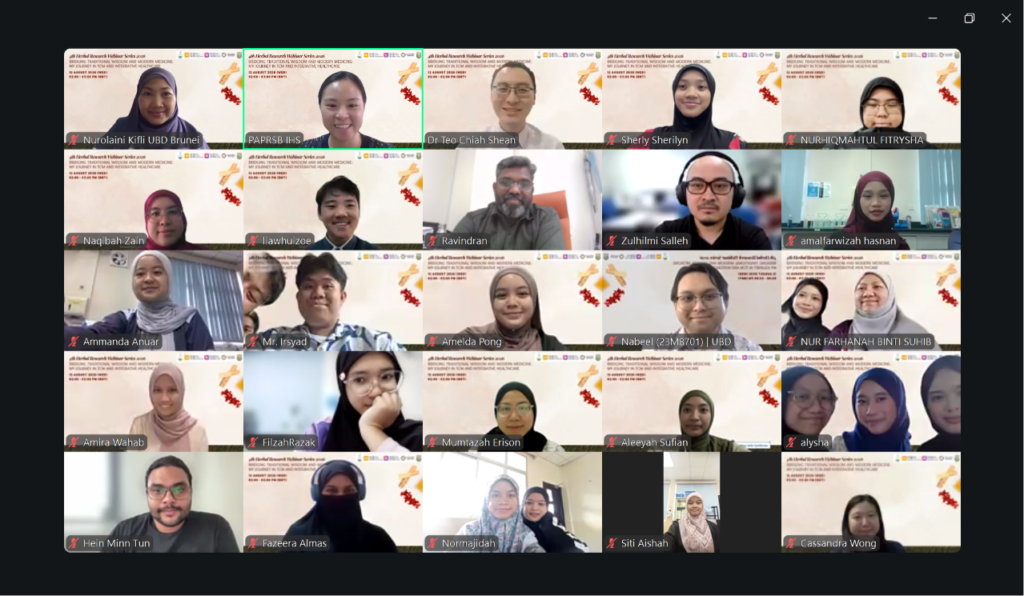
The 4th Herbal Research Webinar Series 2026 was successfully conducted by the Herbal Research Group (HRG) of Universiti Brunei Darussalam (UBD) on 12 August 2026. Dr Teo Chiah Shean, head of Healtcare and Wellness at the REN Wellness Retreat, Malaysia, was invited as the guest speaker, delivering a talk entitled “From Tradition to Evidence: Redefining Malaysia’s Herbal Futu”Bridging Traditional Wisdom and Modern Medicine: My Journey in TCM and Intergrative Healthcarere”, that attracted 65 participants from various faculties and institutions, including Universiti Brunei Darussalam (UBD), IBTE Agro-technology and Applied Sciences Campus, Jerudong Park Medical Centre (JPMC), and Universiti Kuala Lumpur Royal College of Medicine Perak (UniKL RCMP).
Dr. Teo Chiah Shean presented an applied perspective on integrative healthcare, tracing his professional journey from modern medical training and rehabilitation medicine to Traditional Chinese Medicine (TCM) oncology, public-sector policymaking, clinical practice, research, academia and wellness leadership. His central message was that traditional and modern medicine should be coordinated around the needs of the individual—supported by critical thinking, scientific evidence, professional standards and interdisciplinary collaboration—rather than regarded as competing healthcare systems.
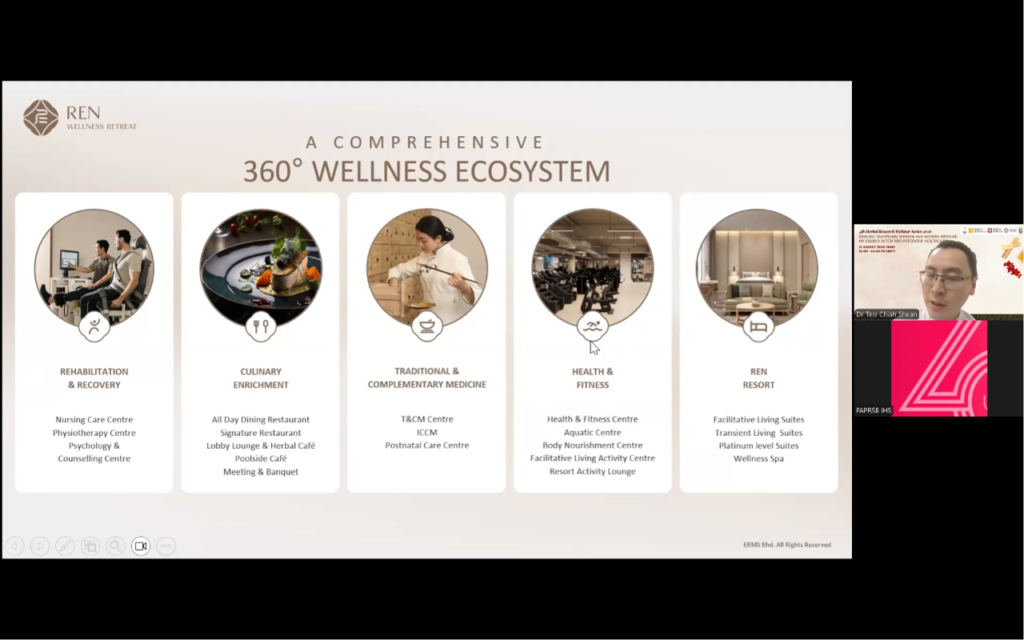
REN Wellness Retreat is being developed around the principles of prevention, recovery and longevity, with the broader objective of extending healthspan—the period during which people remain healthy, active and independent. Its 360-degree wellness model integrates traditional and complementary medicine with modern rehabilitation, nutrition, exercise, psychological support and hospitality. This reflects a growing international trend towards holistic wellness environments that address healthcare needs before treatment becomes necessary and support patients during post-treatment recovery.
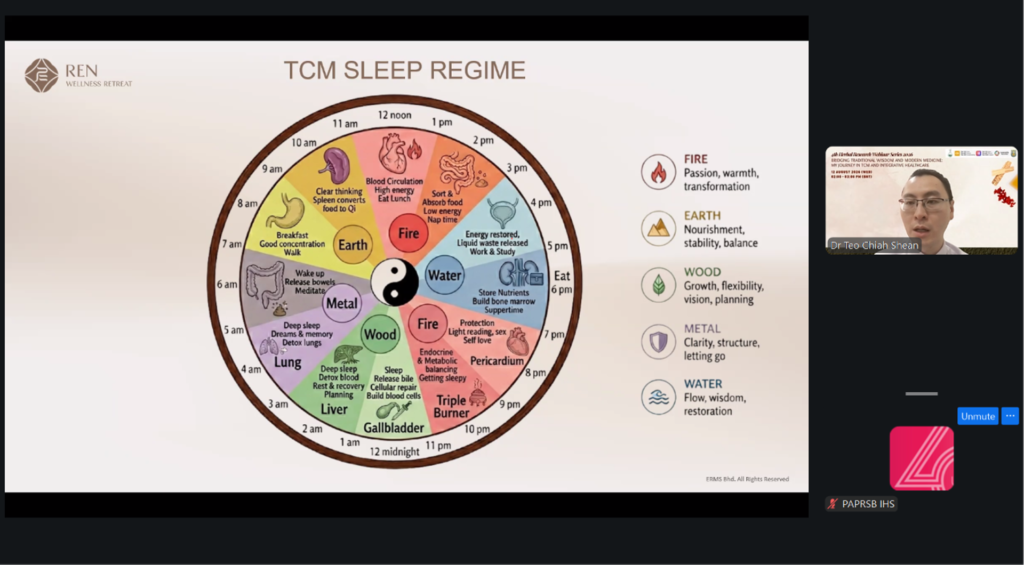
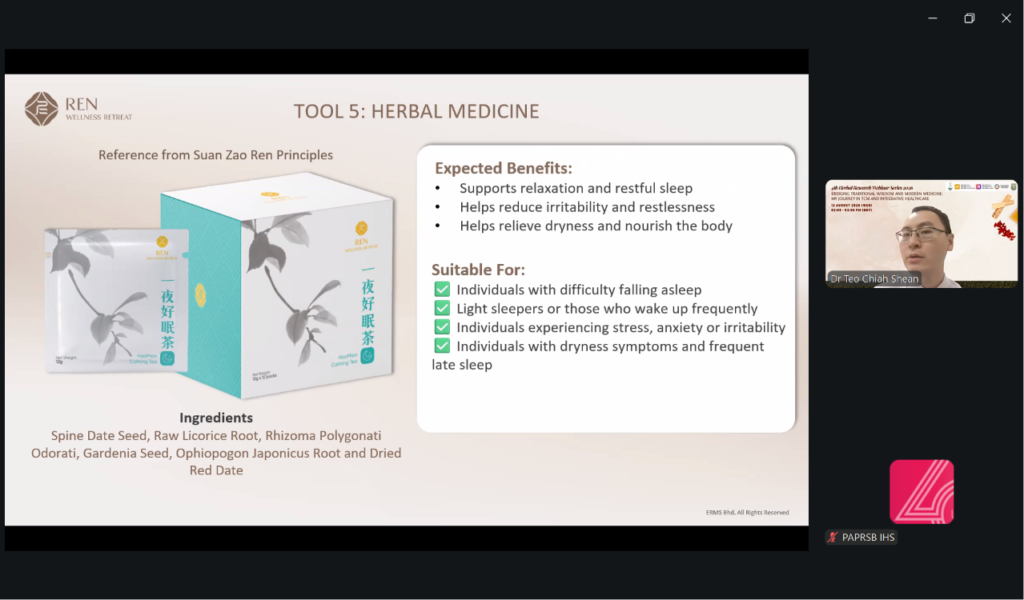
Using poor sleep as a practical example, Dr. Teo demonstrated how integrative care can begin with modern clinical assessment, including identifying contributing medical and psychological conditions, reviewing medicines, explaining sleep physiology and promoting good sleep hygiene. These measures may then be complemented by individualized TCM approaches such as breathing exercises, auricular therapy, acupressure, dietary therapy and herbal tea. The selection of suitable interventions should consider each person’s TCM pattern and body constitution instead of applying a uniform treatment to every individual.
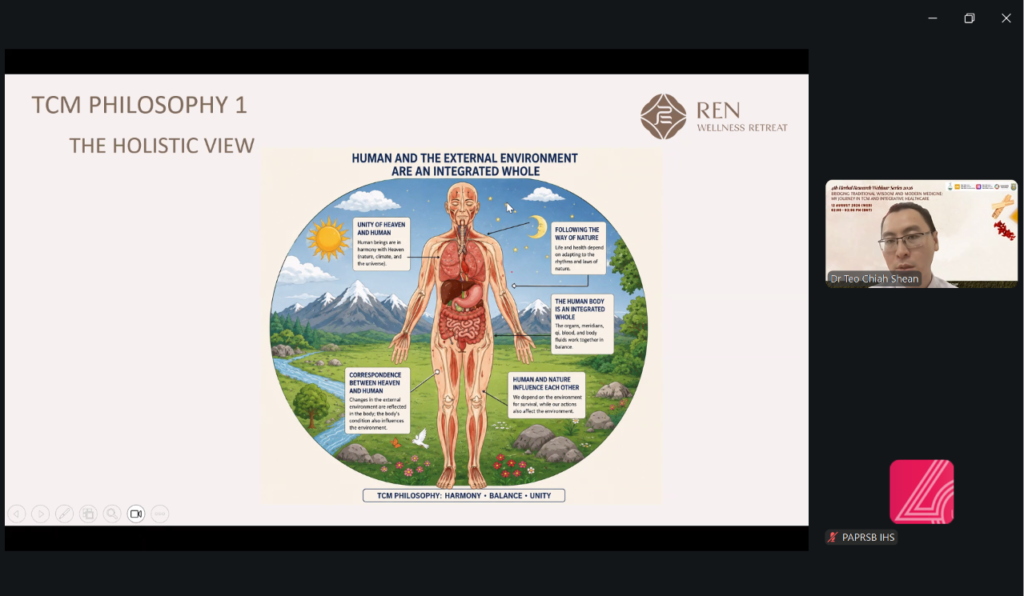
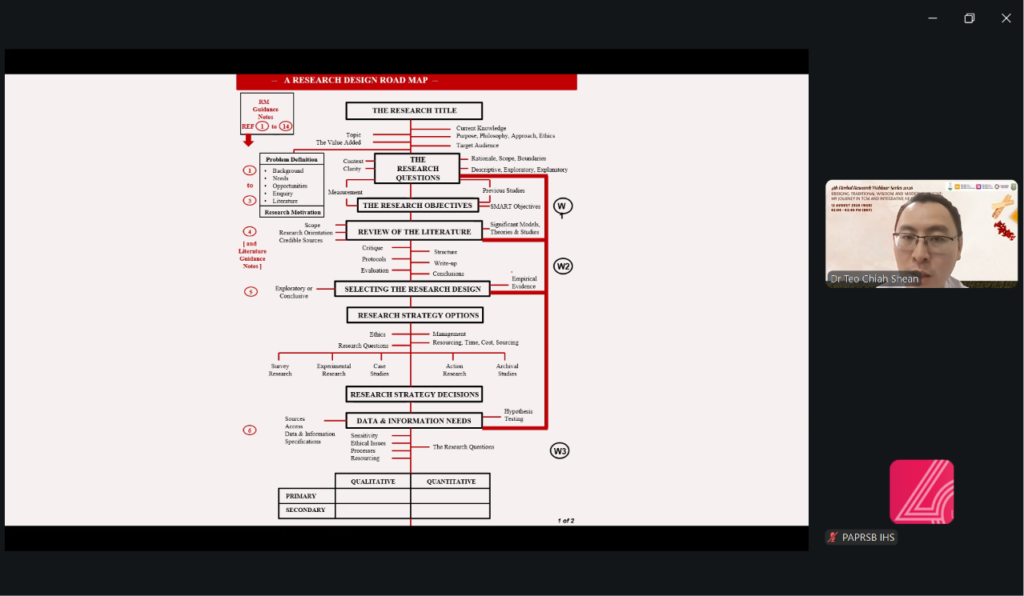
Dr. Teo also highlighted the importance of research training and critical thinking in helping clinicians and researchers test assumptions, communicate across disciplines and translate knowledge into healthcare services or products. Studies involving herbs or TCM procedures should clearly indicate whether the traditional theoretical framework is being considered. This distinction separates studies that examine isolated ingredients or properties from research that evaluates traditional medicine as a holistic system of theory and practice.
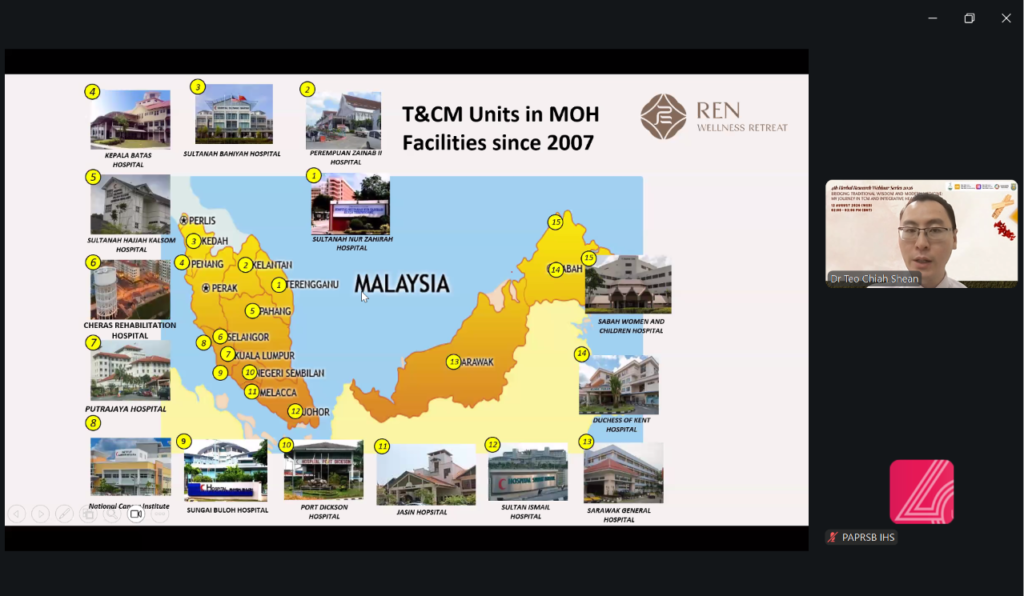
The question-and-answer session emphasized that the responsible integration of TCM into modern healthcare requires trained professionals who understand both paradigms, mutual trust and referral arrangements between practitioners, demonstrated clinical safety, appropriate practice guidelines, legal recognition, monitoring mechanisms and sustained policy engagement. The experiences of Malaysia and Singapore offer useful models that Brunei could adapt to its own healthcare, regulatory and cultural context.
The discussion covered TCM training and pulse diagnosis, educational and career pathways for healthcare students, policy options for Brunei, challenges in integrating TCM with modern medicine, potential training and internship opportunities, and the formal development of Malay traditional medicine.
Overall, the webinar highlighted opportunities for cross-institutional research on Brunei’s local herbs and traditional practices, capacity-building for researchers and healthcare professionals, and carefully governed collaborations that connect traditional knowledge with modern evidence, clinical safety and effective service design.