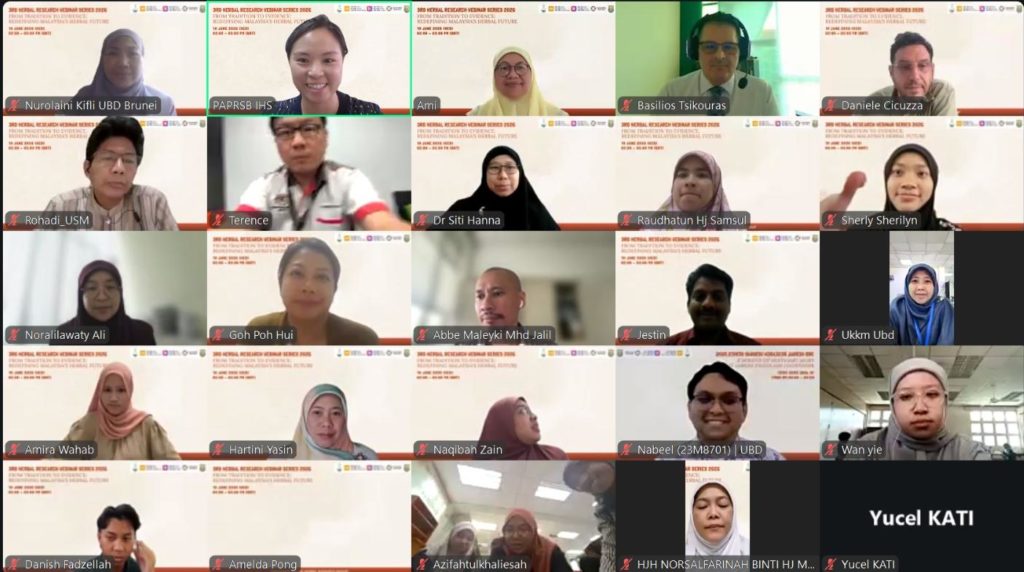

The Herbal Research Group (HRG) of Universiti Brunei Darussalam (UBD), successfully organised the 3rd Herbal Research Webinar Series 2026 on 10 June 2026, featuring Dr. Ami Fazlin Syed Mohamed, Director of the Institute for Medical Research (IMR), National Institutes of Health (NIH), Ministry of Health Malaysia, as the invited speaker. The webinar, titled “From Tradition to Evidence: Redefining Malaysia’s Herbal Future”, attracted 55 participants from various faculties and institutions, including Universiti Brunei Darussalam (UBD), IBTE Agro-technology and Applied Sciences Campus, Jerudong Park Medical Centre (JPMC), Ministry of Health (MOH) Brunei, Health Promotion Centre (HPC) Brunei, IMR Malaysia, International Islamic University Malaysia (IIUM), Universiti Kuala Lumpur Royal College of Medicine Perak (UniKL RCMP), Universitas Semarang (Indonesia), and Abdul Wali Khan University Mardan (Pakistan).
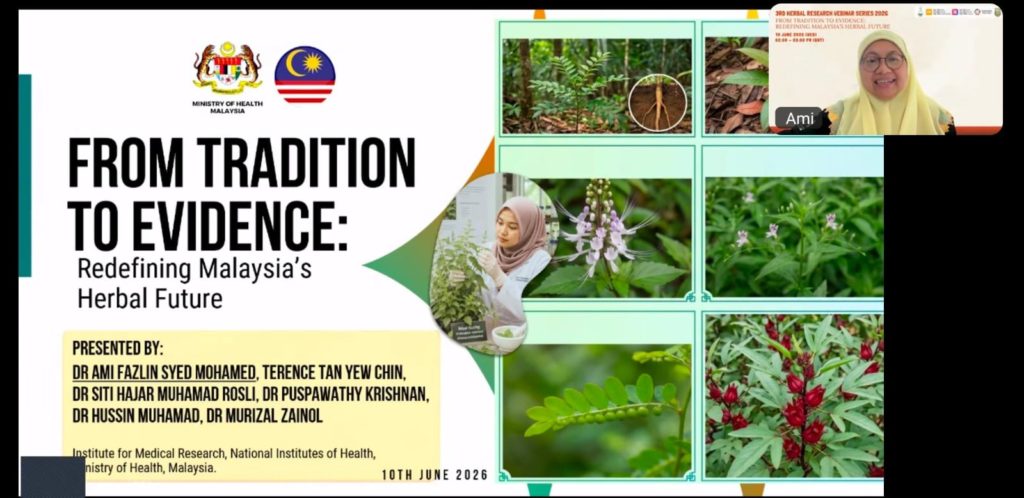
In her presentation, Dr. Ami shared Malaysia’s two-decade journey in transforming herbal medicine research from fragmented individual efforts into a coordinated national ecosystem supported by policy, regulation, research, industry, and healthcare stakeholders. She highlighted the pivotal role of initiatives such as the National Key Economic Area (NKEA) Entry Point Project 1 (EPP1), the Traditional and Complementary Medicine Blueprint, and the National Biotechnology Policy, which collectively provided the strategic direction and funding necessary to develop evidence-based, high-value herbal products.
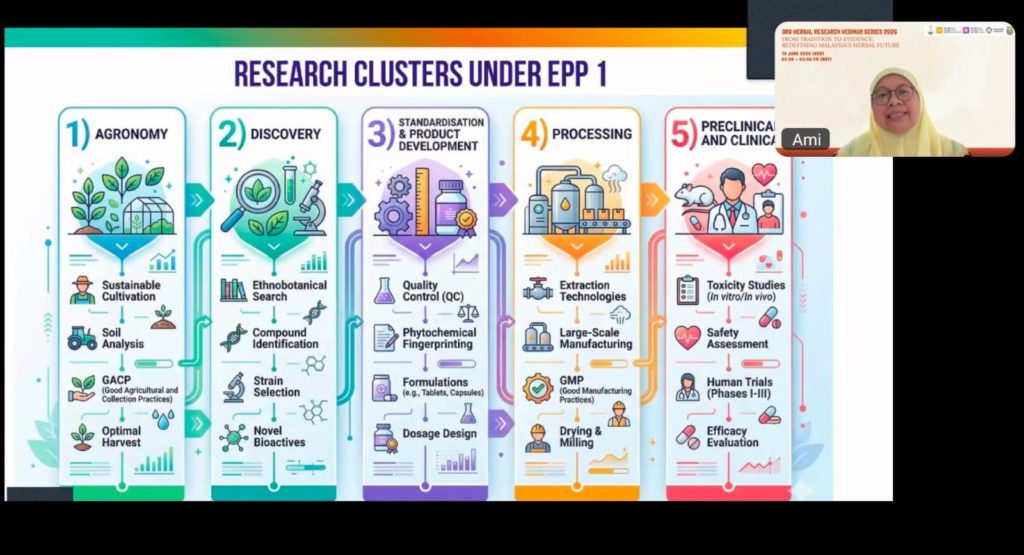
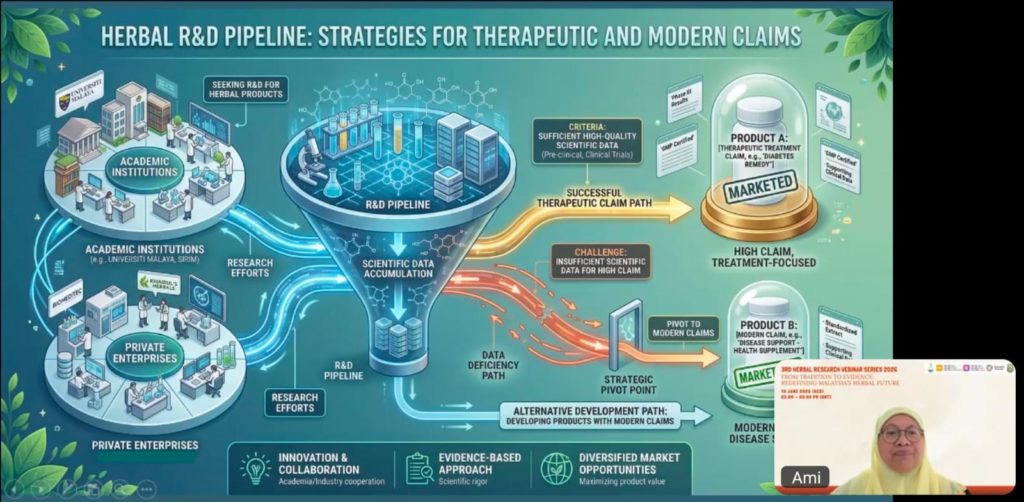
A major focus of the webinar was the importance of establishing an integrated herbal product development pipeline. Dr. Ami outlined Malaysia’s five research clusters—agronomy, discovery, standardisation and product development, processing, and preclinical/clinical research—which collectively support the progression of herbal products from traditional knowledge and raw materials to clinically validated products. She emphasised that successful herbal development requires multidisciplinary collaboration among botanists, chemists, agronomists, clinicians, researchers, regulators, and industry partners rather than isolated efforts by individual researchers.
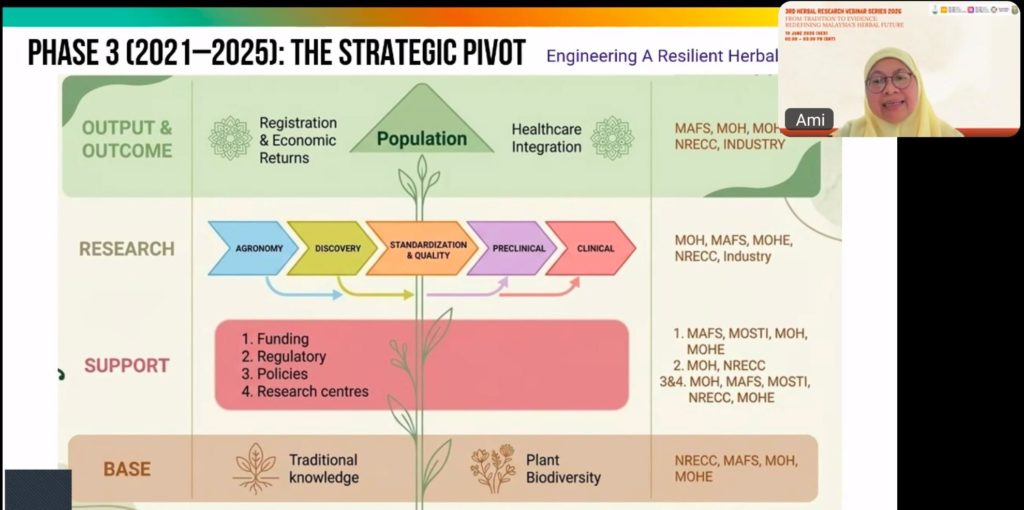
Reflecting on lessons learned from earlier phases of Malaysia’s herbal development programme, Dr. Ami discussed challenges including disconnected research activities, premature large-scale cultivation without validated products, duplication of research efforts, and limited translation of discoveries into market-ready products. These experiences led to the development of a more structured ecosystem centred on evidence generation, quality assurance, standardisation, regulatory compliance, and clinical validation.
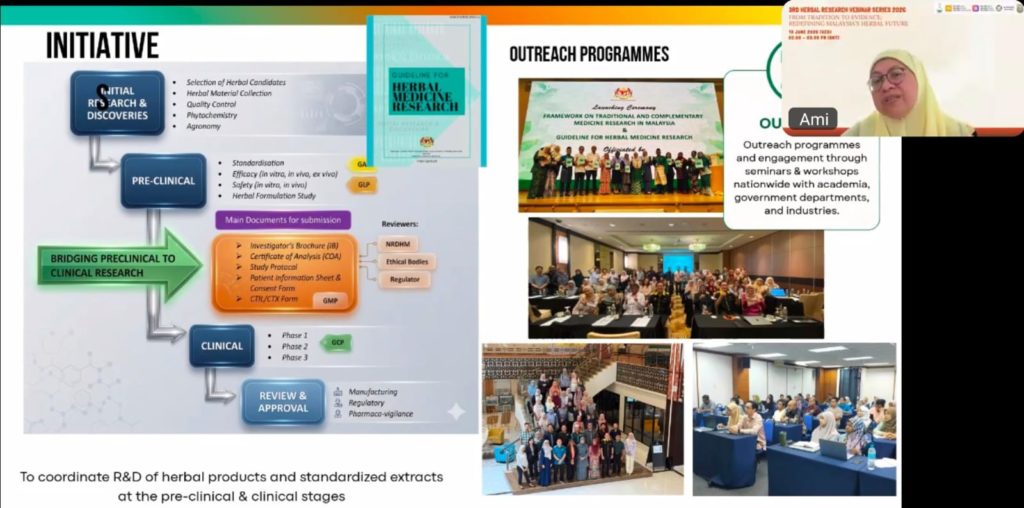
The webinar also highlighted Malaysia’s regulatory framework for herbal products, including pathways for traditional products, natural products with modern claims, natural products with therapeutic claims, and health supplements. Dr. Ami explained that higher-level therapeutic claims require robust scientific evidence, including preclinical studies and clinical trials, similar to pharmaceutical development, albeit tailored to herbal products. She further introduced Malaysia’s Guideline for Herbal Medicine Research, which provides researchers with a clear roadmap from discovery and preclinical evaluation through clinical studies and product registration.
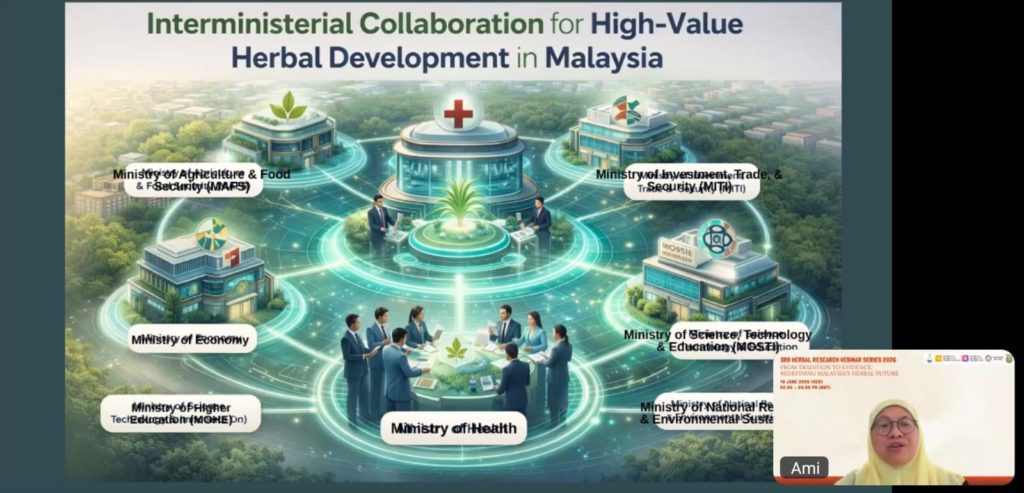
The discussion session generated significant interest among participants, particularly regarding policy development, intellectual property management, cultivation strategies, regulatory pathways, clinician involvement, and opportunities for Brunei–Malaysia collaboration. Dr. Ami emphasised the importance of engaging regulators and policymakers early in the development process, involving clinicians in clinical validation studies, and establishing clear intellectual property frameworks to facilitate successful product commercialisation. She also encouraged regional collaboration to strengthen herbal research capacity while respecting biodiversity and benefit-sharing regulations.
Overall, the webinar provided valuable insights into Malaysia’s experience in building a comprehensive herbal medicine ecosystem and offered practical lessons for Brunei Darussalam as it seeks to strengthen its own herbal research and development landscape. The session reinforced the importance of coordinated national strategies, scientific evidence, regulatory support, and multidisciplinary partnerships in translating traditional medicinal knowledge into safe, effective, and commercially viable herbal products.